Kitchen Cabinets — Materials Deep Dive
Kitchen Cabinet Materials Philippines
What actually goes into a kitchen cabinet that lasts 15+ years in the Philippine climate? Carcass substrate, door material, laminate finish, edge banding, and hardware — every material choice explained with specific Philippine conditions in mind.
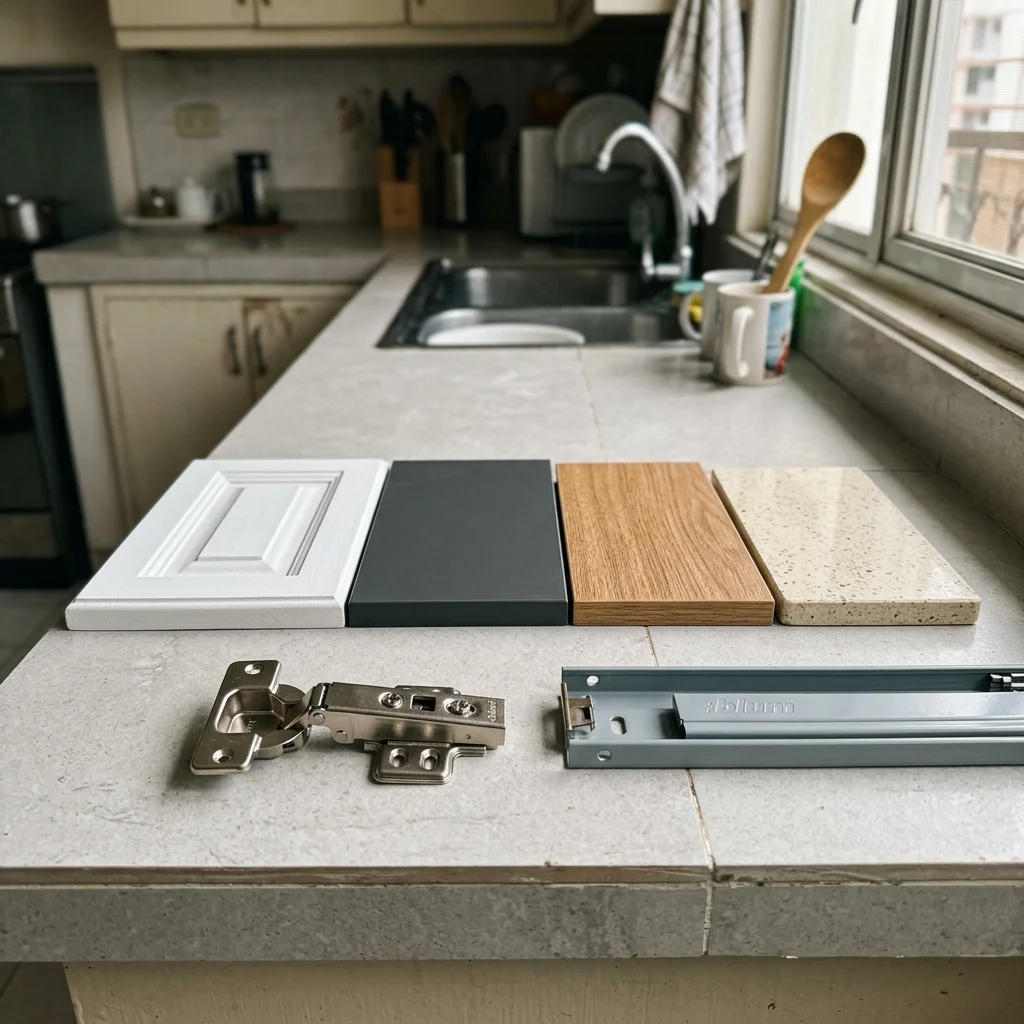
Kitchen Cabinet Carcass: The Structural Core
The carcass (cabinet box) is the structural skeleton of every kitchen cabinet. It carries the load of your dishware, food storage, and appliances — and it lives inside your wall cavity where ventilation is minimal and humidity accumulates. The wrong carcass material in a Philippine kitchen fails from the inside out.
Marine Plywood — The Philippine Standard
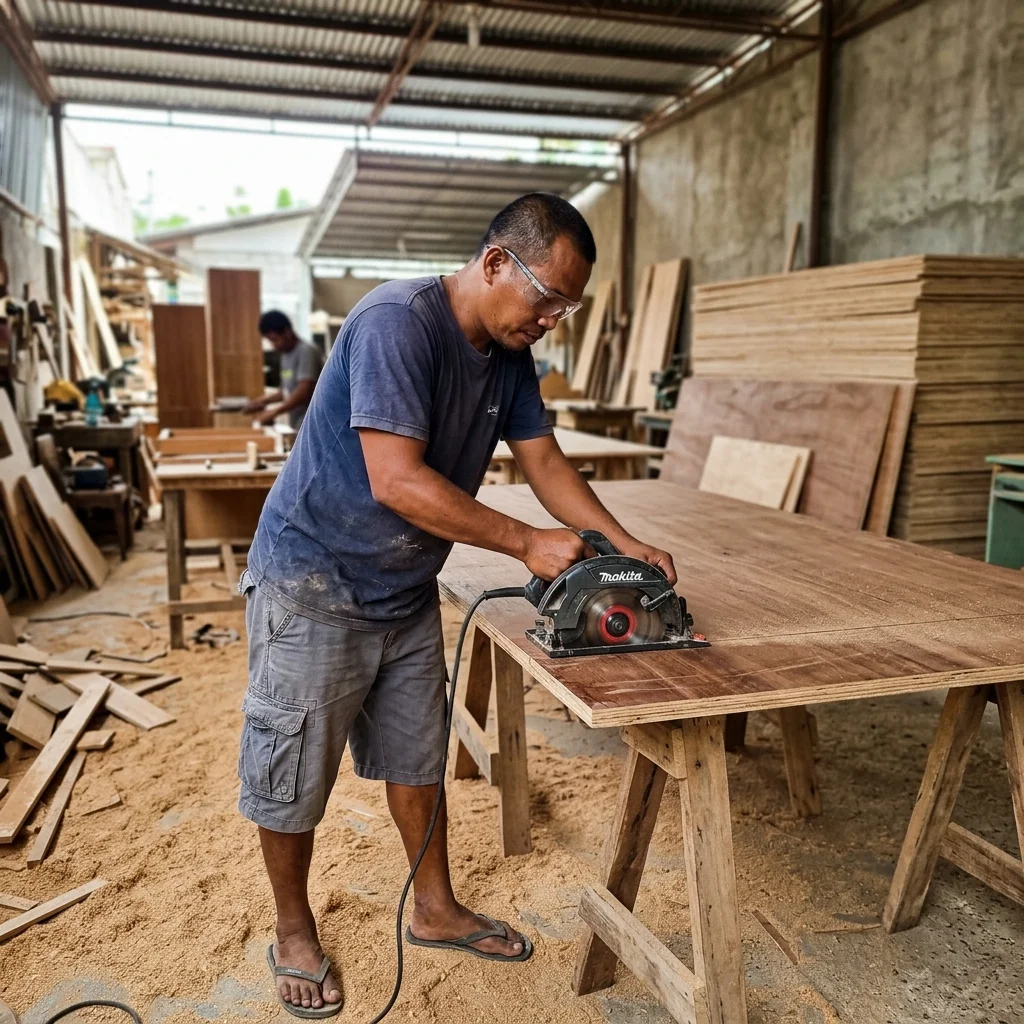
18mm Grade A marine plywood bonded with WBP (Weather and Boil Proof) phenol-formaldehyde resin is the correct carcass material for Philippine kitchens. The phenol-formaldehyde adhesive does not degrade under sustained humidity — it is rated for continuous 100% humidity exposure.
Key specifications: 18mm thickness for carcass walls, top, and bottom; 12mm for interior shelves; 6mm for back panels. All marine plywood — no cost reduction from thinner back panels in non-marine material.
→ Full marine plywood guide: grades, pricing, and how to verify
MDF — Where It Fails in Philippine Kitchens
MDF uses urea-formaldehyde adhesive that degrades above 70% relative humidity. Philippine kitchens average 78% RH ambient, 85–95% during cooking. The degradation timeline: base panel swelling begins in Year 1–2, door misalignment in Year 2–3, structural failure near sink areas in Year 3–5.
MDF is acceptable only for wardrobe door panels in dry bedrooms with PVC-sealed edges — never as a kitchen cabinet carcass. → Full MDF guide: where it works and where it doesn't
Particle Board — Not Recommended
Particle board uses the lowest-quality urea-formaldehyde bonding and disintegrates when exposed to water. Base cabinet failure in wet areas within 1–3 years. CabinetMakerPH does not use particle board on any project at any price tier.
Door Materials
Kitchen Cabinet Door Materials Philippines
The door is the most visible part of your kitchen — and in Philippine conditions, the door material determines the long-term surface appearance.
HPL (Recommended)
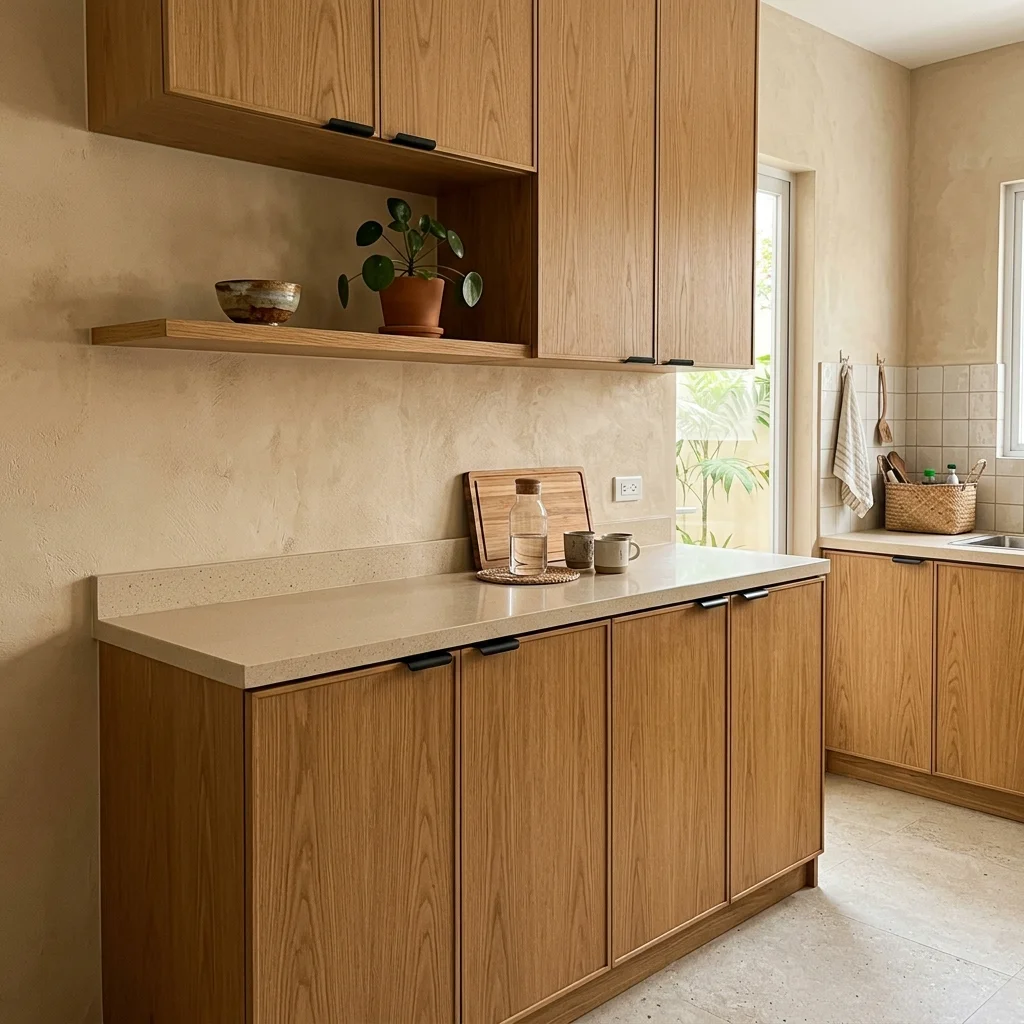
High-Pressure Laminate on HDF substrate. Rated for continuous moisture. Scratch and steam resistant. Available in 100+ colors and wood grains. Most popular for Standard tier kitchens.
Acrylic Sheet
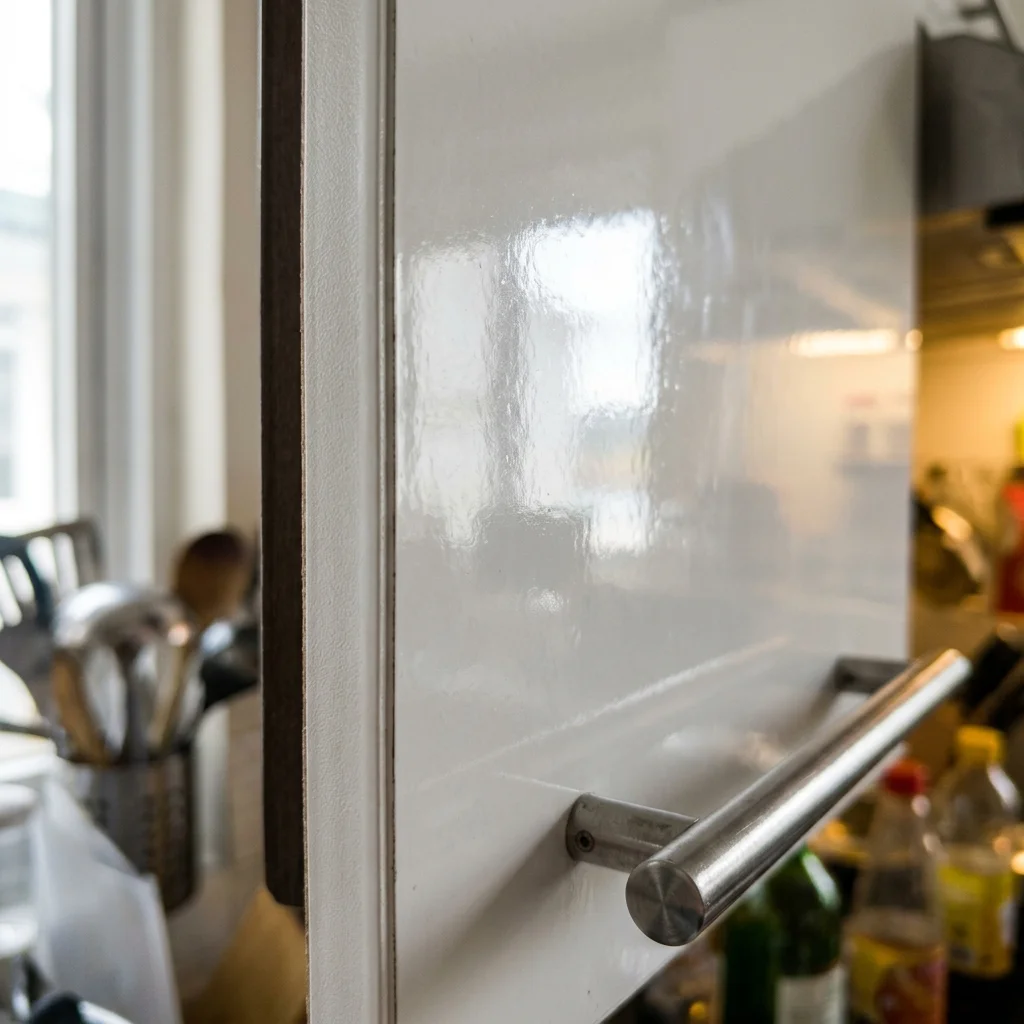
High-gloss mirror finish. Premium look for BGC and Makati condos. Fingerprint-prone. Edge chipping possible. Best applied with aluminum edge frame for longevity.
PVC Laminate
Most affordable option. Good moisture resistance. Slight vulnerability at unsupported edges. Acceptable for economy kitchens and rental properties. Wide color range.
Melamine Paper
Lowest moisture resistance. Not recommended for kitchen cabinet doors in Philippine humidity. Acceptable only for bedroom wardrobe interiors in air-conditioned rooms.
Hardware Quality
Kitchen Cabinet Hardware: Why Brand Matters
Kitchen cabinet doors are opened 15–25 times daily. Over 10 years that is 55,000–90,000 hinge cycles. Generic hinges fail at 20,000–30,000 cycles. Blum CLIP top hinges are rated for 100,000 cycles with an integrated soft-close damper — the same hinge used by IKEA, Scavolini, and every major European kitchen manufacturer.
For drawer slides, Blum TANDEM plus BLUMOTION is the standard: rated 30kg per drawer, 30,000-cycle life, smooth extension with integrated buffer. Generic slides stick, squeak, and fail within 5 years under daily cooking load.
CabinetMakerPH uses Blum CLIP top hinges and Blum TANDEM slides as standard on every project at every price tier. These are not upgrade options — they are the base specification.
Ask About Hardware OptionsBlum / Häfele ✓
- 100,000-cycle hinge rating
- Integrated soft-close damper
- 3-axis adjustable (in/out, up/down, side)
- 30,000-cycle drawer slide rating
- 30kg drawer load rated
Generic Hinges ✗
- 20,000–30,000 cycle rating
- No damping — doors slam
- Fixed position only
- 5,000–10,000 cycle slides
- 10–15kg load limit
Edge Banding: The Most Overlooked Material Decision
Edge banding seals all exposed plywood or fiberboard edges from moisture. In Philippine kitchens, unsealed or poorly applied edge banding is the primary entry point for moisture that causes internal cabinet swelling — even when the carcass is marine plywood.
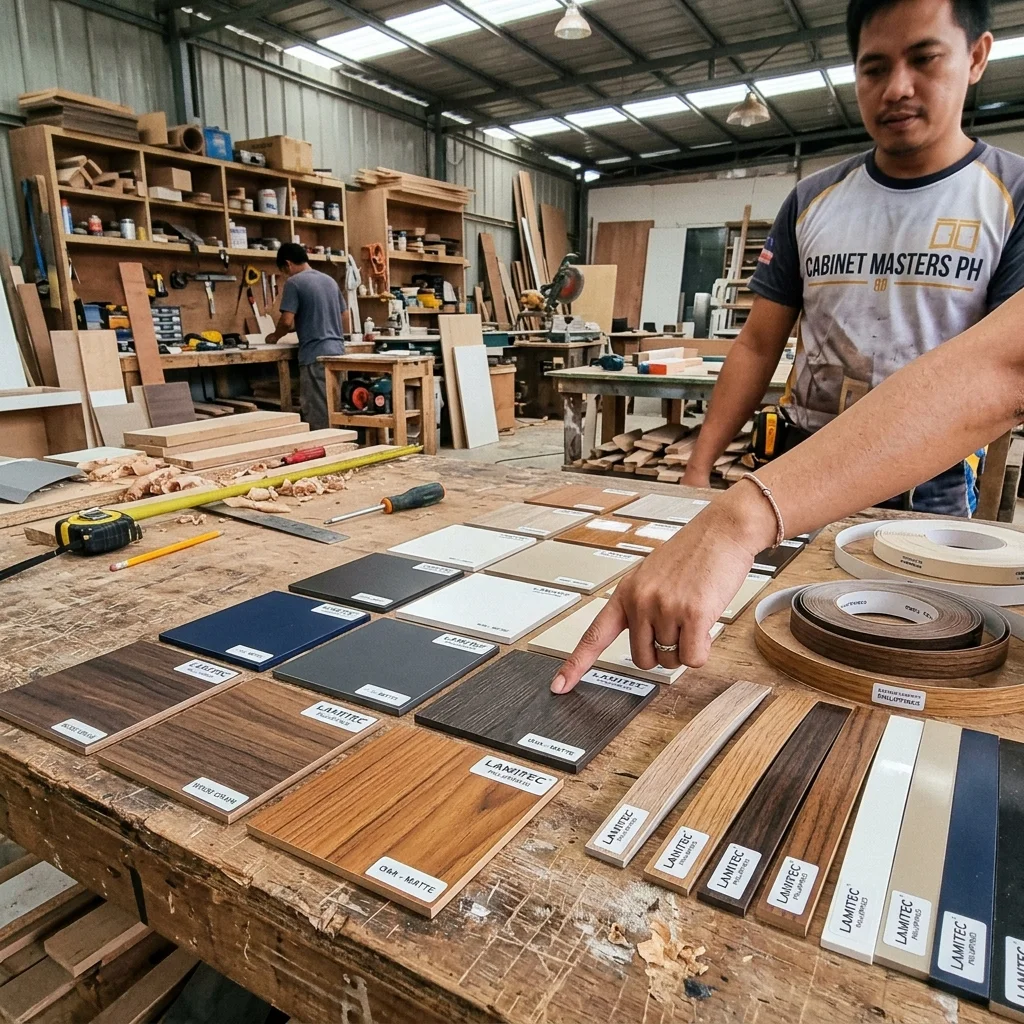
PVC Edge Banding (Recommended)
Minimum 1mm thick PVC hot-melt applied to all exposed edges. PVC is moisture-resistant and flexible. Edge radius should match the laminate surface radius. CabinetMakerPH applies PVC edge banding to every exposed edge including shelf edges and interior divider edges.
ABS Edge Banding (Alternative)
ABS (Acrylonitrile Butadiene Styrene) edge banding has better impact resistance than PVC. Preferred for base cabinet edges at floor level where physical contact is more frequent. Available in matching colors to HPL door finishes.
Paper Edge Tape (Avoid)
Paper or melamine edge tape is used by budget makers to save cost. It peels, absorbs water, and is not rated for Philippine kitchen humidity. If your cabinet edges have paper-thin tape, moisture is already penetrating the substrate.
Paint / Lacquer Edges (Avoid)
Some makers paint raw plywood edges instead of applying proper edge banding. Paint edges chip and crack within 1–2 years, opening the edge to moisture. Not acceptable on any quality cabinet work.
Cross-Silo Link: For full details on moisture-resistant material ratings for kitchens and bathrooms, see the moisture-resistant cabinet materials guide →
Questions
Kitchen Cabinet Materials FAQ
What material is used for kitchen cabinet carcasses in the Philippines?
18mm Grade A marine plywood (WBP phenol-formaldehyde bonded) is the correct carcass material. MDF degrades above 70% humidity — Philippine kitchens average 78% ambient and 85–95% during cooking. MDF kitchen carcasses swell and fail within 3–5 years. Full marine plywood guide →
What is the best door material for kitchen cabinets?
HPL (High-Pressure Laminate) on 18mm HDF substrate is the best kitchen door material. Rated for continuous moisture, scratch-resistant, steam-resistant. Available in 100+ finishes. Acrylic sheet is premium but fingerprint-prone. PVC laminate is the most affordable acceptable option. Melamine paper laminate is not recommended for Philippine kitchen doors.
What hinge brand should be used for kitchen cabinets?
Blum CLIP top hinges are the standard — 100,000-cycle rating with integrated soft-close damper. Häfele is the alternative. Generic hardware store hinges fail at 20,000–30,000 cycles (3–5 years of daily cooking use). CabinetMakerPH uses Blum on every project at all price tiers as standard specification.
How thick should kitchen cabinet carcasses be?
18mm marine plywood for carcass walls, top, and bottom. 12mm for fixed interior shelves. 6mm for back panels. 18mm provides the screw-hold strength for upper wall cabinets carrying 15–25kg dishware loads. Thinner carcass walls (12–15mm) are a structural risk for heavy upper cabinets.
Recent Projects
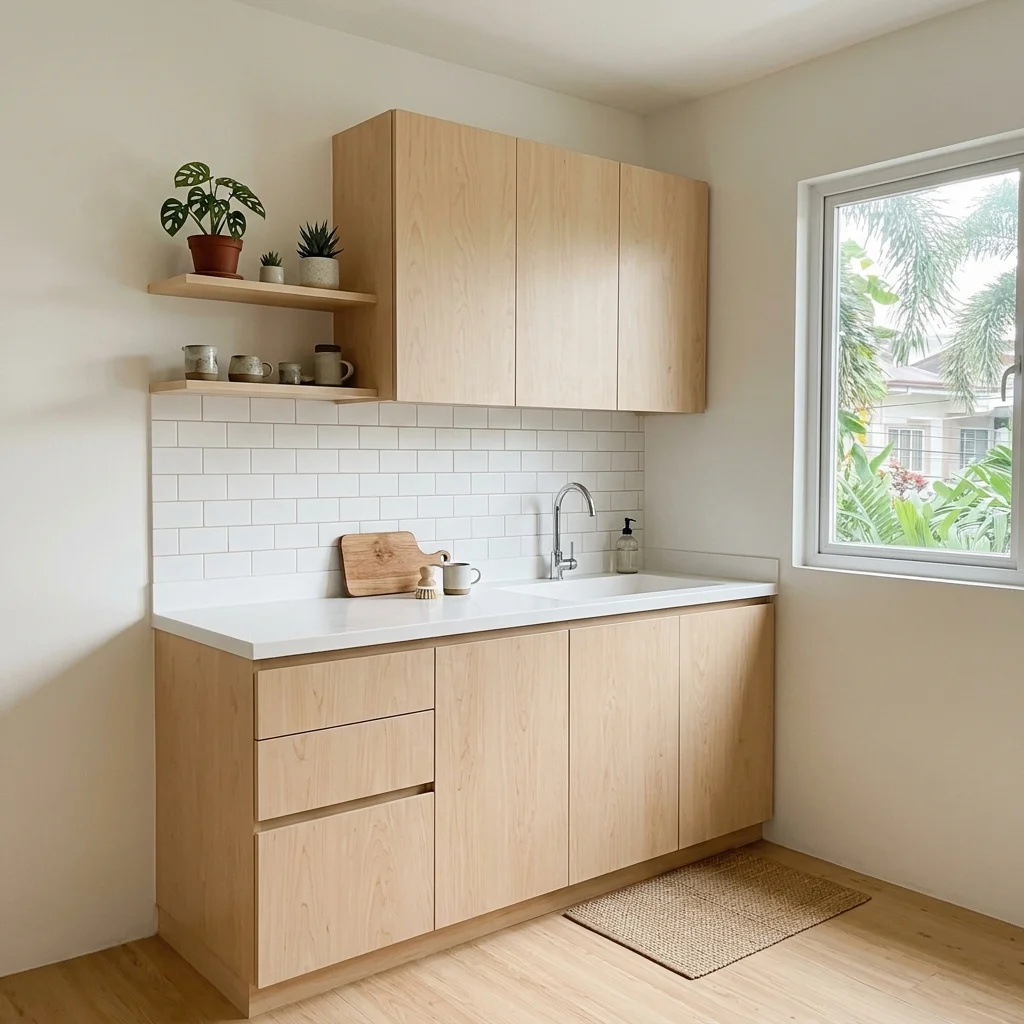
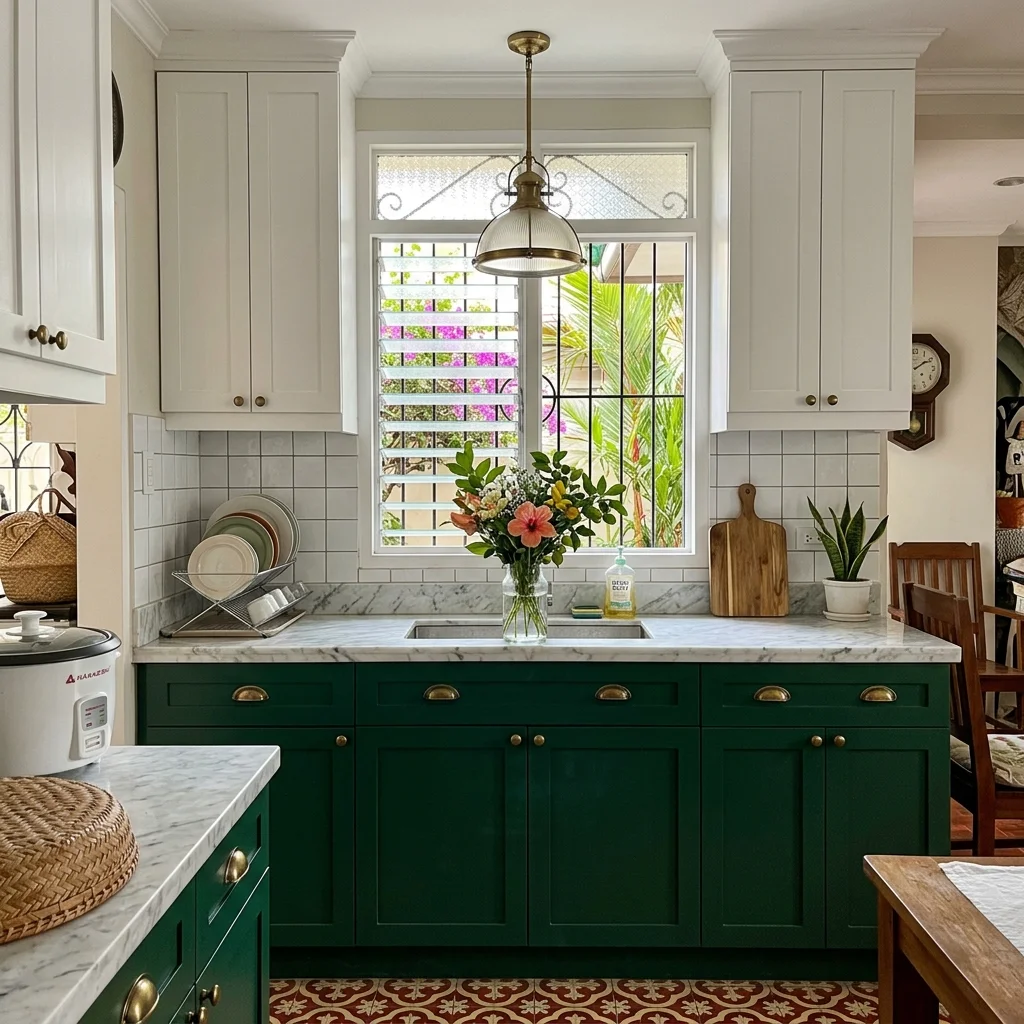
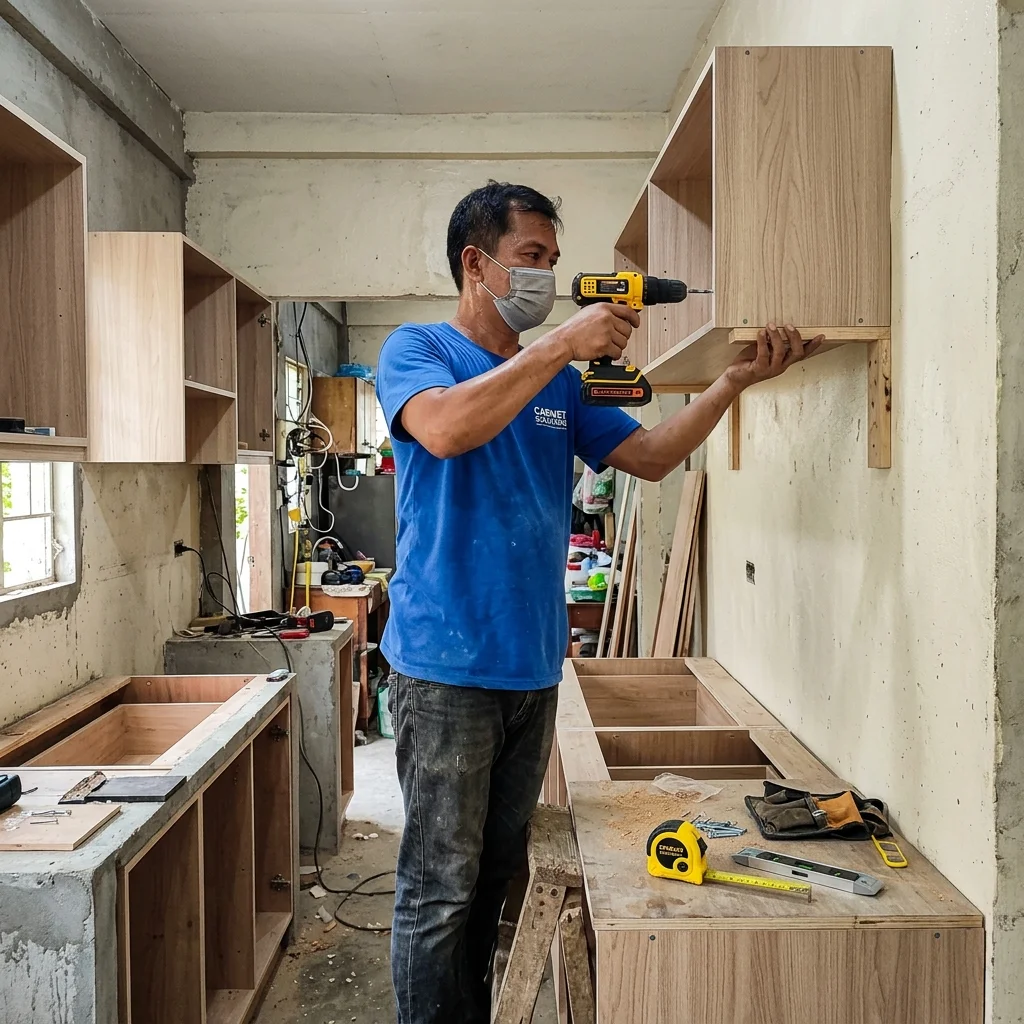
Gallery — Cabinet Materials
Real installations across Metro Manila, Cebu, and Davao.
Get a Kitchen Built with the Right Materials
Marine plywood. HPL doors. Blum hardware. PVC edge sealed. No substitutions after signing.